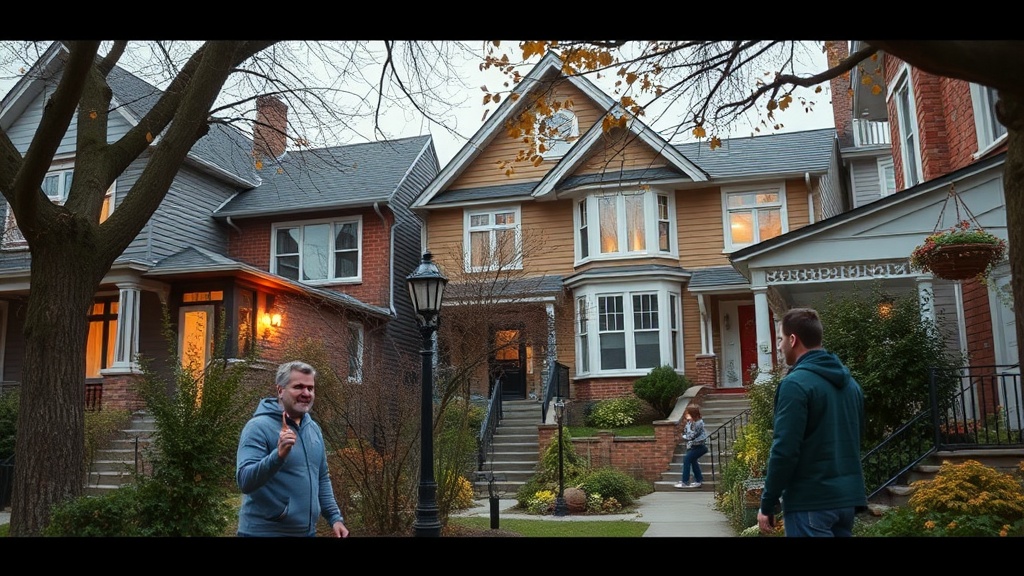
How to Build a Genuine Connection with Your Glebe Neighbours (Without Being That Person)

There's a persistent myth that community spirit happens organically — that you'll simply bump into neighbours who become lifelong friends while fetching your mail or walking down Bank Street. In reality, The Glebe's sense of neighbourhood warmth is built deliberately, one small interaction at a time. It doesn't require joining every committee or attending every event; it just takes showing up consistently and authentically in the spaces we already share.
I've lived in The Glebe for eight years, and I've watched neighbours transform from polite nods into the people who water my plants when I'm away and save me a seat at community meetings. The difference between surface-level acquaintance and genuine connection often comes down to knowing where to show up — and how to do it without forcing awkward small talk or coming across as overly eager.
Where do neighbours actually gather in The Glebe?
The Glebe Community Centre on Third Avenue isn't just a building with programs — it's the neighbourhood's living room. Drop-in volleyball on Wednesday evenings, the weekly farmers' market in the parking lot during warmer months, and the annual Glebe Garage Sale all create natural opportunities for repeated exposure. You don't need a membership or a specific skill; you just need to appear regularly enough that faces become familiar.
Brown's Inlet, that quiet stretch of water connecting to the Rideau Canal, is where you'll find Glebe residents who've figured out that benches are better than living rooms for casual conversation. Morning dog walkers, afternoon readers, evening strollers — the inlet draws a rotating cast of locals who've learned that sitting on a bench with a coffee is an open invitation to chat. I've had some of my best neighbourhood conversations there, usually starting with a comment about the ducks or the weather and somehow ending with restaurant recommendations or local history.
For those with children, the playground at Lansdowne Park is an obvious gathering spot, but the real parent network often forms at the splash pad near the Ottawa Farmers' Market pavilion. There's something about watching kids navigate water features that breaks down barriers between adults. The Glebe's parent community is tight-knit but not closed off — newcomers who show up consistently and don't try too hard usually find themselves included.
How do you start conversations without being awkward?
The Glebe's demographic mix — young professionals, established families, long-retired homeowners, and students from nearby Carleton — means there's no universal conversation starter. What works consistently is commenting on something immediate and specific. "The line at Bagelshop is out the door today" lands better than generic weather observations. "Your dog always seems so happy" beats "Nice dog."
I've found that carrying a canvas bag from The Ottawa Bagelshop and Deli on Fifth Avenue often sparks recognition — it's a shared reference point, a signal that you're part of the local ecosystem. Similarly, mentioning that you're headed to Kanata Centrum (wait, that's not right — let's stick to Glebe specifics) — mentioning you're picking up ingredients from the Wild Oat on Bank Street gives locals a sense of your routines.
The farmers' market on Sundays is particularly fertile ground because vendors create natural conversation anchors. Asking someone about their favourite stall, or whether they've tried the new seasonal offering, gives you something concrete to discuss. The Glebe Community Association organizes the market, and volunteering even occasionally — helping with setup or breakdown — puts you in contact with dozens of neighbours in low-pressure contexts.
Don't underestimate the power of being a regular at local establishments. The baristas at Bridgehead on Bank Street know their regulars' orders; becoming one of those regulars means they start conversations with you, which makes you visible to other regulars. The same applies to Arlington Five on Arlington, where the communal tables and shared pastry case create natural opportunities for interaction.
What community groups actually welcome newcomers?
The Glebe has its share of established institutions, but newer residents often worry these groups are closed circles. In my experience, nothing could be further from the truth — though some groups require more persistence than others.
The Glebe Community Association holds monthly meetings that are genuinely open to anyone. Their environmental initiatives — particularly the tree planting and garden stewardship programs — attract a rotating group of participants who share tools, expertise, and conversation while doing something tangible for the neighbourhood. The Association's website lists upcoming events, but I've found the most reliable way to stay informed is following their bulletin board outside the community centre.
For book lovers, the Glebe's little free libraries are more than decorative street furniture — they're conversation starters and community connectors. The one on Powell Avenue seems particularly active, with a rotating collection that suggests active curation. Leaving a thoughtful note inside a donated book occasionally leads to correspondence with whoever finds it next.
The Glebe Horticultural Society welcomes members of all experience levels, and their annual plant sale is one of the neighbourhood's most genuinely social events. Even if you don't garden, showing up to ask questions and buy a few plants puts you in contact with people passionate about The Glebe's green spaces. Many lifelong friendships in this neighbourhood have started over tomato seedlings and advice about shade-tolerant perennials.
Sports leagues through the community centre — particularly the casual drop-in programs rather than competitive teams — attract people who want activity without commitment. The Wednesday night volleyball I mentioned earlier has a core group that's been playing together for years, but they always need substitutes and welcome new players who don't take themselves too seriously.
How do you maintain connections without being overbearing?
The mistake many people make — and I've made it myself — is treating new neighbour connections like networking contacts. You meet someone interesting at the market, exchange numbers, and immediately try to schedule a coffee date. It feels forced, and it often fizzles.
Stronger connections develop through repeated casual encounters. When you see someone at the Glebe Community Centre gym, then again at the farmers' market, then again walking down O'Connor Street, you develop a rhythm. You start with waves, progress to brief exchanges, and eventually find yourself in genuine conversation without either party feeling pressured.
Social media has complicated this dynamic. The Glebe has active Facebook groups and Instagram communities where residents share recommendations, lost pet alerts, and local news. These platforms can accelerate connection — commenting thoughtfully on someone's garden photo or offering helpful advice about local contractors builds recognition — but they shouldn't replace in-person presence. The best approach is using online tools to support offline relationships, not the reverse.
I keep a mental (sometimes actual) list of neighbours I want to know better — the woman with the excellent dog who walks past my place each morning, the older gentleman who tends the community garden plot near Bank Street, the family who always has interesting yard sales. When I see them, I make a point of being present, of putting my phone away and being approachable. Sometimes it leads to conversation; sometimes it doesn't. The consistency matters more than any single interaction.
What's the difference between a neighbour and a friend?
Not every neighbour becomes a friend, and that's perfectly fine. Some of my most valued relationships in The Glebe are purely neighbourly — we wave, we chat about local happenings, we help each other with practical matters, but we don't socialize outside those contexts. These relationships matter enormously for neighbourhood cohesion.
The Glebe works as a community because enough of us know enough of each other to create a web of casual accountability. We notice when something seems off at a neighbour's house. We keep an eye on each other's packages. We share information about which contractors are reliable and which streets have been plowed after snowstorms. This network doesn't require deep friendship — it requires recognition and mutual regard.
That said, genuine friendships do emerge from these neighbourly foundations. I've found that the Glebe residents who become real friends usually share something beyond proximity — a common interest, similar schedules, compatible temperaments. The neighbourhood provides the context; the connection provides the depth.
The key is patience. I've watched neighbours move in and immediately try to insert themselves into every community gathering, only to burn out or move away within a year. The ones who stay — who build lasting connections — are those who show up consistently without urgency, who let relationships develop at their own pace, who contribute to the neighbourhood's collective life without dominating it.
The Glebe rewards presence. Show up at the market often enough, walk your dog down the same streets regularly enough, attend enough community events casually enough, and you stop being a newcomer and start being a neighbour. The transition is subtle — you probably won't notice it happening — but one day you'll realize you can't walk to the grocery store without running into someone you know, that you have opinions about local issues backed by actual relationships, that this neighbourhood has become yours not because of any single dramatic moment but because of hundreds of small interactions accumulated over time.
That's how community actually works. Not through grand gestures or forced networking, but through the quiet accumulation of presence and recognition. The Glebe has been doing this for generations — all you have to do is join the rhythm.